Agent System Building Strategy: Single-Agent vs Multi-Agent
1. What Are Single-Agent and Multi-Agent Systems
1.1 Single-Agent Systems
A single-agent system consists of one LLM, a set of tools, and prompts.
It’s like an independent professional — running independently, relying on its own logic and model to complete tasks without teamwork. It collects data, makes decisions, and executes actions on its own.
LangGraph team’s definition:
An AI agent is a system that uses an LLM to decide the control flow of an application.
Ilya Sutskever at NeurIPS 2024:
Current AI systems can’t truly understand and reason. While they can simulate human intuition, future AI will demonstrate more unpredictable capabilities in reasoning and decision-making.
1.2 Multi-Agent Systems
Multi-agent systems use multiple smaller, independent agents to collaboratively handle complex tasks.
It’s like an efficient team rather than a solo actor — instead of relying on one agent for everything, multiple agents are gathered together, each handling part of the problem, communicating, collaborating, and adapting in real-time.
2. Multi-Agent Architecture Design
Two most common designs: Swarm and Supervisor
- Supervisor (Coordinator-Worker pattern): Multiple agents coordinated by a central supervisor who controls communication and task delegation
- Swarm (Worker Group pattern): Agents dynamically hand off control based on their specialties, with the system remembering the last active agent for context continuity
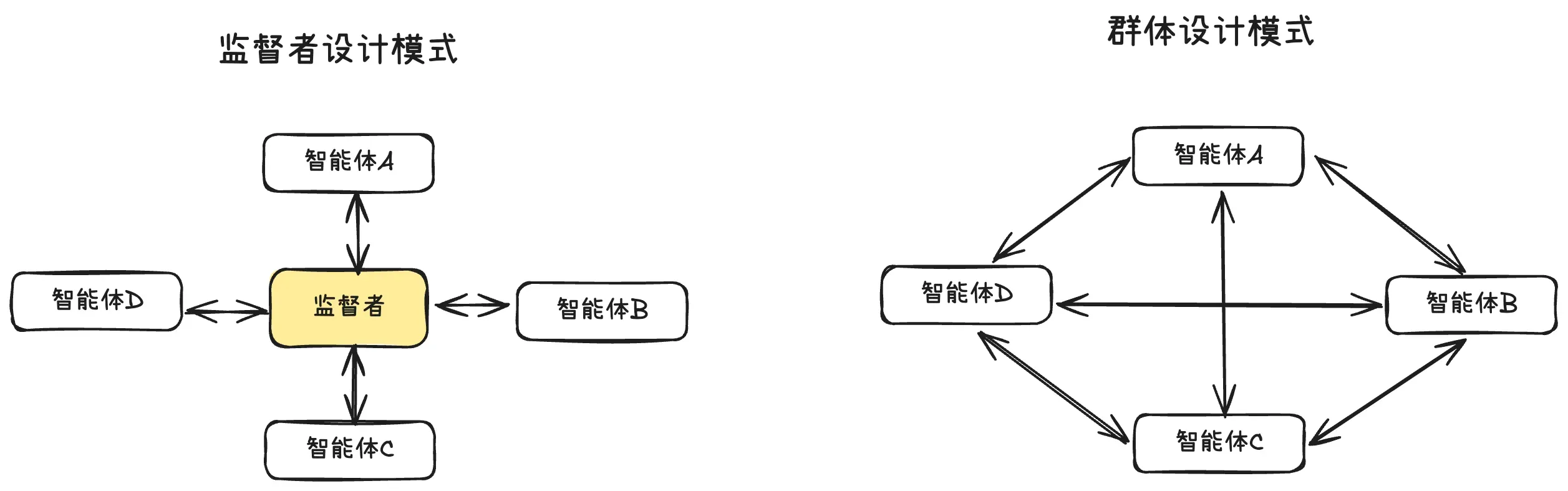
Two less common but reference-worthy patterns:
- Hierarchical: Extension of supervisor pattern — each group has a manager, each manager reports to a final director
- Custom multi-agent workflow: Each agent communicates with only some agents, with partially deterministic flows
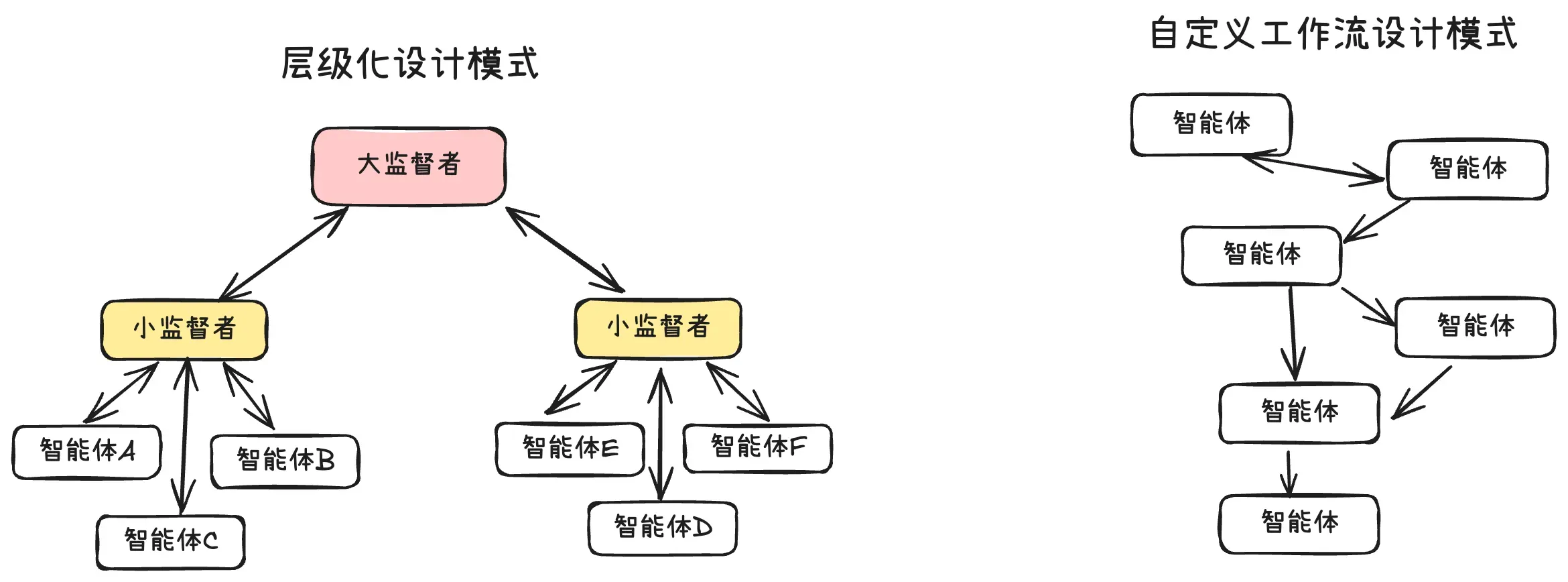
Don’t be constrained by these known patterns — new patterns will emerge from custom workflow designs. Explore freely.
3. Differences Between Single and Multi-Agent
Multi-agent architectures face “shortcoming” issues:
- Context interruption between main and sub-agents
- Context interruption between sub-agents
3.1 Main-Sub Agent Context Interruption
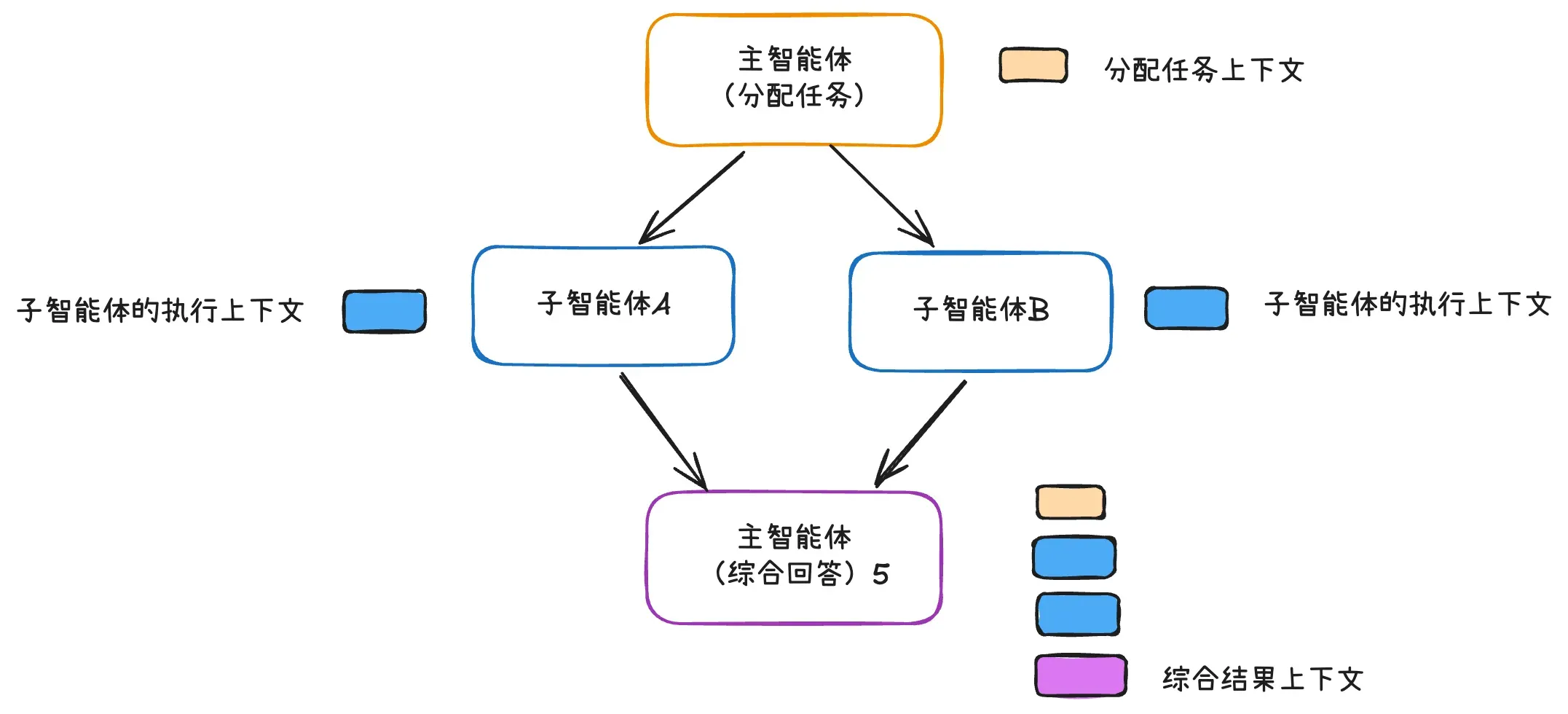
When the main agent executes first and then delegates to sub-agents, the sub-agent opens a new context window — creating context interruption because the architecture didn’t plan for context transfer.
The solution: provide key context from the main agent when assigning tasks.
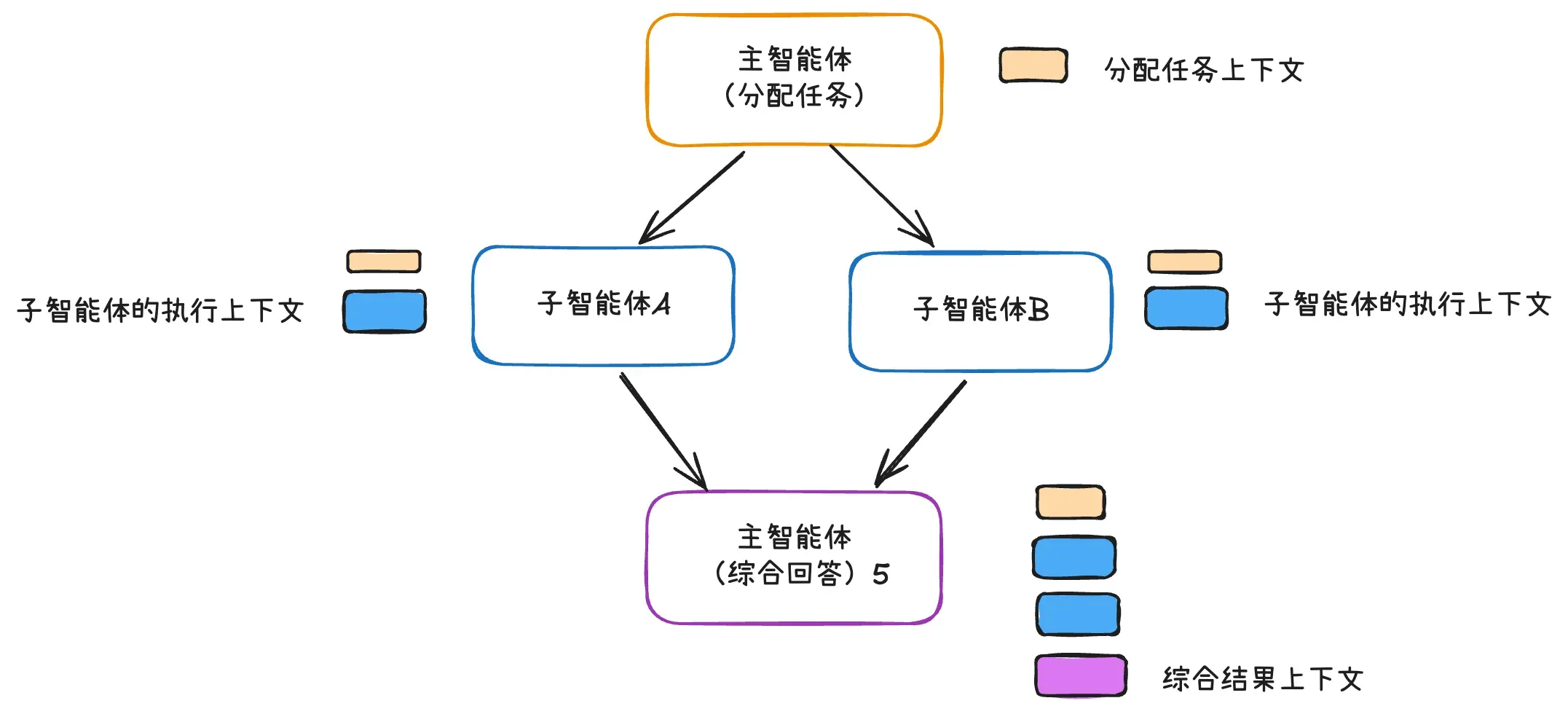
A critical remaining issue: parallel execution causes context isolation — Sub-Agent A can’t know what Sub-Agent B is doing.
3.2 Context Interruption Between Sub-Agents
Consider a document generation task: Sub-Agent A generates art domain content, Sub-Agent B generates music domain content. Results might show:
- Format inconsistency: A generates Markdown, B generates HTML — merge fails
- Completely different perspectives: content feels disconnected and fragmented
This is a parallelism problem — no good solution exists without architecture changes. Switching to single-agent architecture would solve these issues.
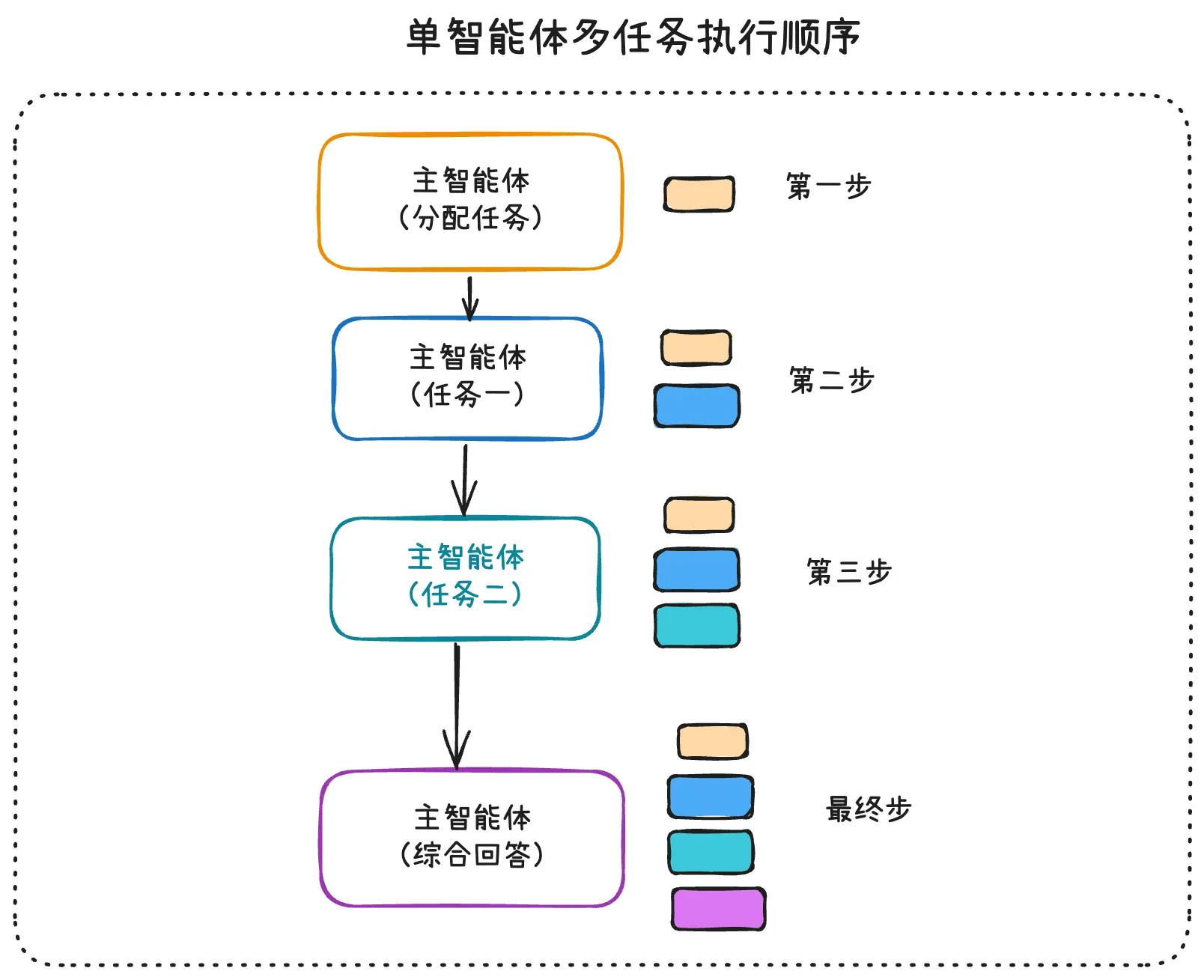
3.3 Context Management Comparison
Key differences:
- Context management: Single-agent has coherent context; multi-agent risks isolation during parallel execution
- Execution coordination: Single-agent needs none; multi-agent’s greatest challenge is coordinating multiple sub-agents
- Technical development: Single-agent is simpler to develop; multi-agent has maintenance and testing advantages due to modularity
4. Single-Agent Advantages
When agents need shared context or heavy inter-dependency, single-agent is most suitable.
Single-agent has lower development cost — mostly just context compression strategy needed. The focus is what context to collect and how.
If you’re not certain you need multi-agent, build single-agent first — start simple, add complexity only when needed.
Single-agent has greater advantages in “write” operations:
In 2024, many models performed poorly at editing code. The common pattern was “edit application model” — a small model rewrites entire files based on markdown instructions from a large model. Today, edit decisions and execution are typically handled by a single model in one action.
5. Multi-Agent Advantages
Multi-agent systems excel at tasks involving heavy parallelization, information exceeding single context windows, and complex tool interactions.
5.1 Advantages in “Read” Operations
Multi-agent has greater advantages in reading operations. Research tasks are the most suitable scenario:
Research tasks essentially require flexibility to pivot and explore side connections. The most important aspect is search, and search is essentially compression — distilling effective insights from massive corpora.
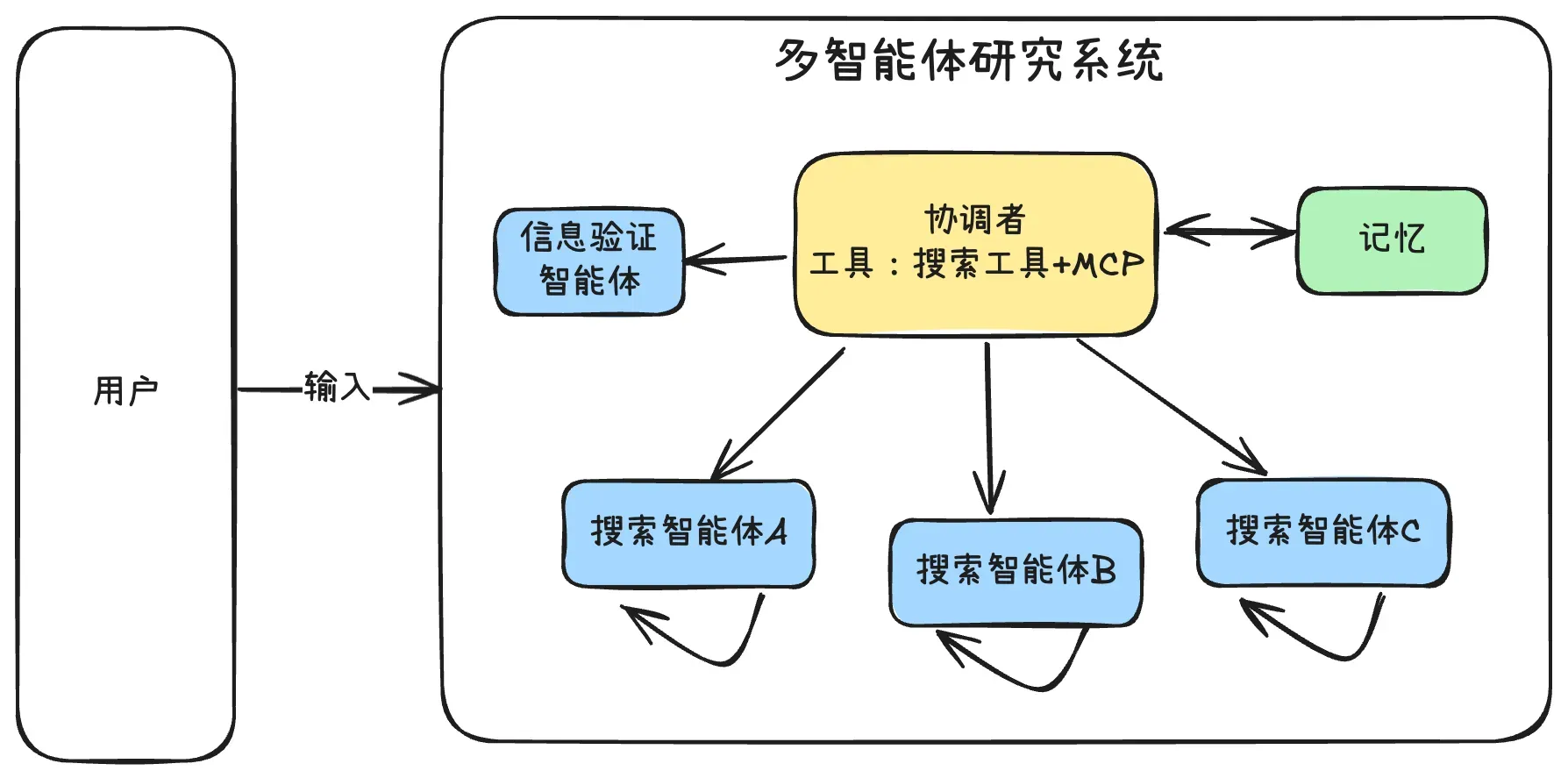
Benefits of multi-agent search:
- Multiple sub-agents provide more possibilities, perspectives, and insights
- With sufficient, isolated context windows, sub-agents can simultaneously pursue multiple independent directions
The coordinator is most critical — requiring stronger model capabilities. Claude’s team found that using Opus 4 as lead with Sonnet 4 as sub-agents outperformed single-agent Opus 4 by 90.2%.
5.2 Value in Complex Tool Interactions
Context confusion degrades model performance in tool selection.
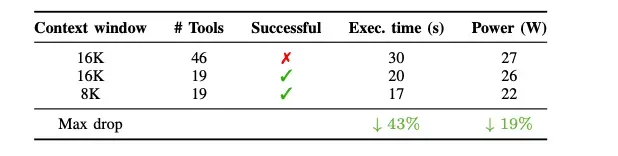
A recent paper evaluated small models on GeoEngine benchmark with 46 different tools. A quantized Llama 3.1 8b failed with all 46 tools but succeeded with only 19, despite fitting within the 16k context window.
The RAG MCP paper noted:
When tool count exceeds 30, descriptions start overlapping and causing confusion. Beyond 100 tools, models almost certainly fail. Using RAG to select fewer than 30 tools significantly shortens prompts and triples tool selection accuracy.
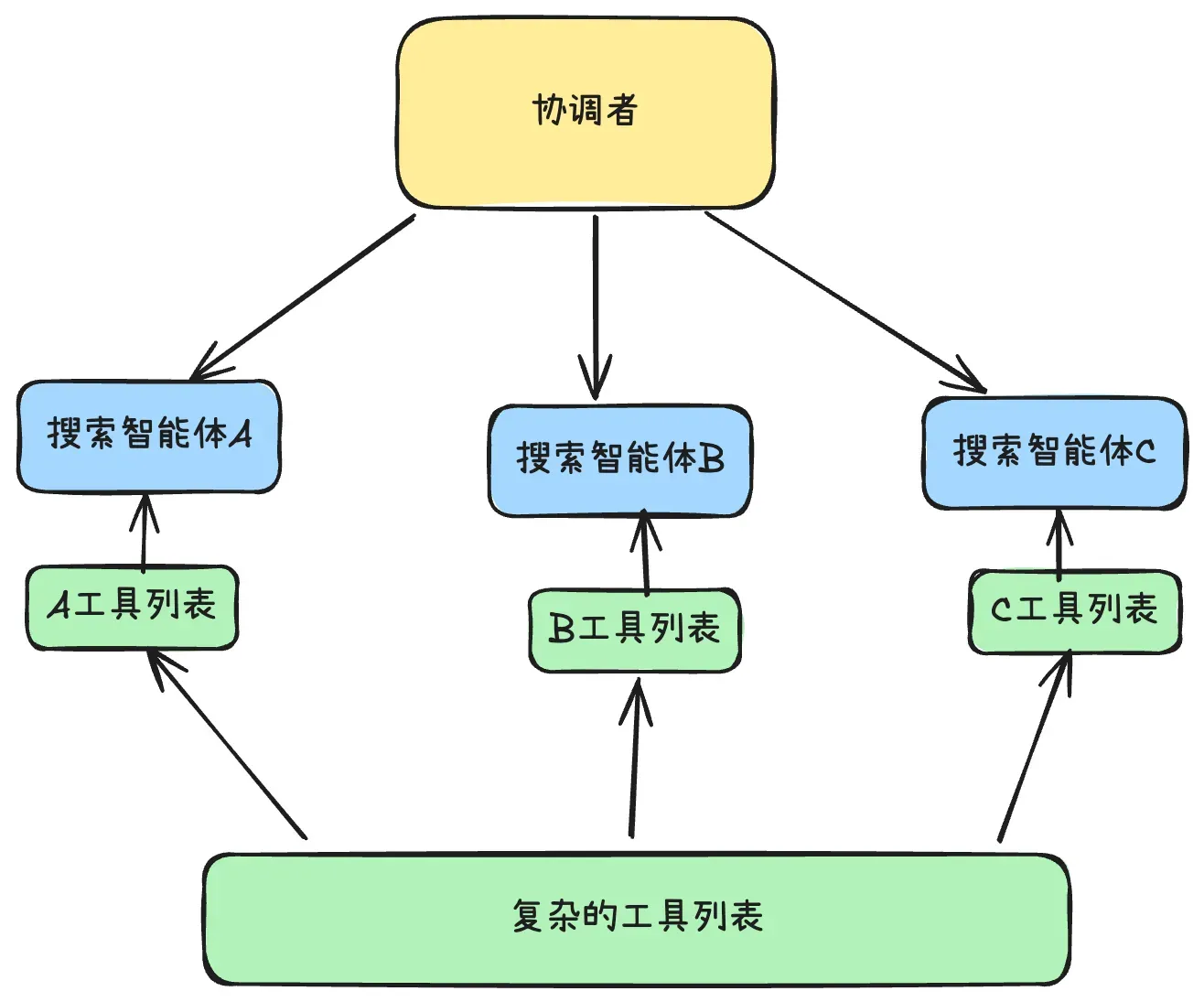
Multi-agent systems enable context isolation, providing domain-specific tools to specialized sub-agents, dramatically improving tool selection success rates.
5.3 Multi-Agent Improvement Methods
Common issues and solutions:
- Think like your agent — observe each decision step, find logic deviations, optimize prompts
- Clear sub-task descriptions — each sub-agent needs: objective, output format, tools, source guidance
- Scale work to query complexity: Simple (1 agent, 3-10 tool calls), Medium (2-4 agents, 10-15 calls), Complex (10+ agents, unlimited calls)
- Prioritize tool design and selection
- Use agents for self-improvement — learn from failed outputs and tool errors
- Start broad, then focus — expert-level human research strategy
- Guide reasoning process in prompts
- Parallel tool calling for speed and performance
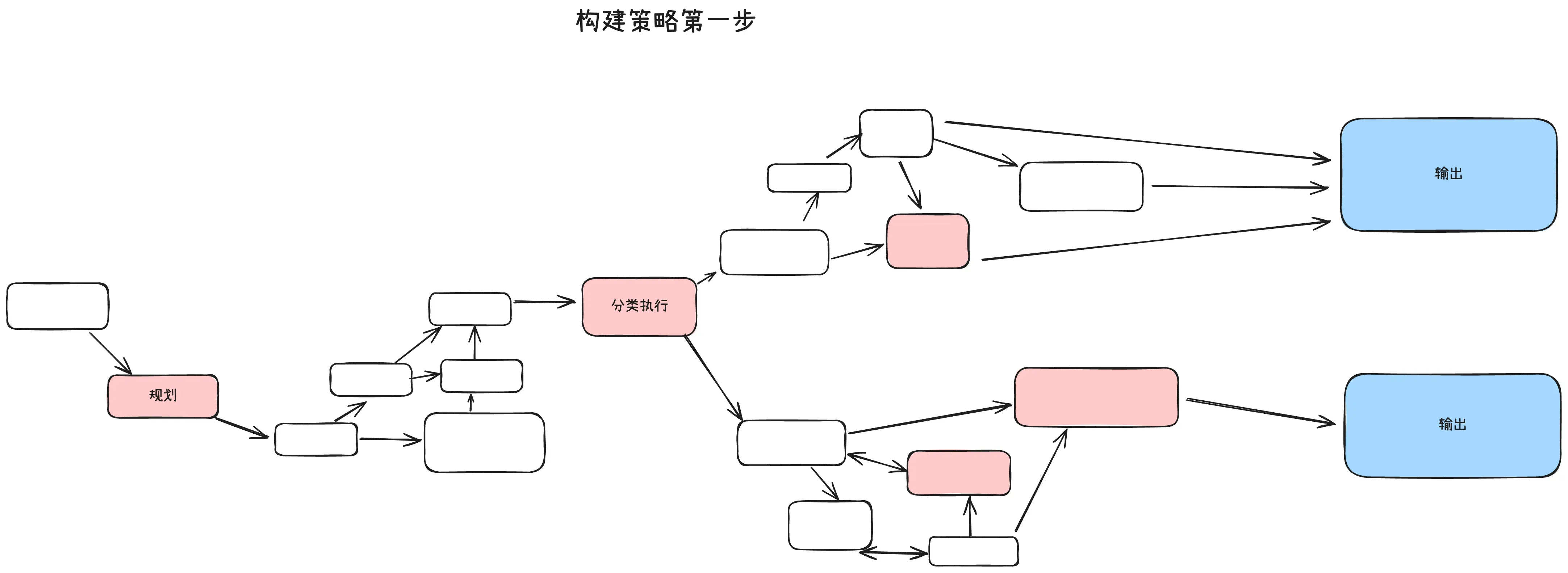
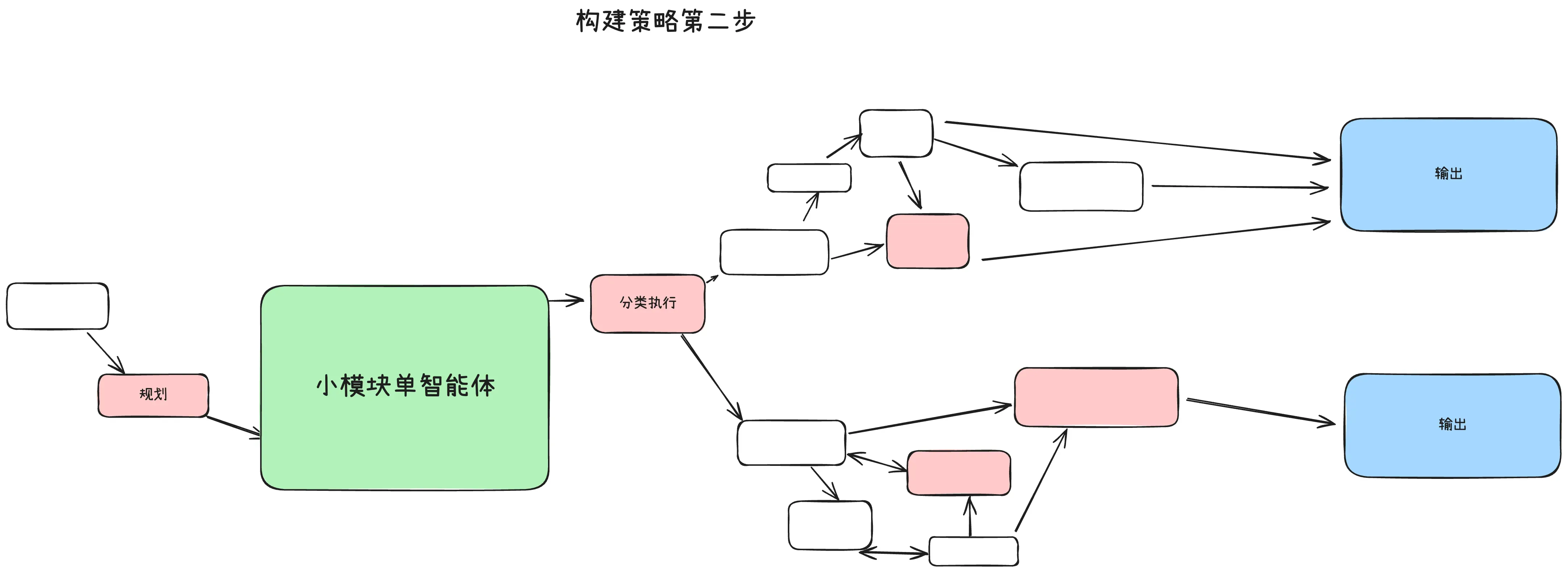
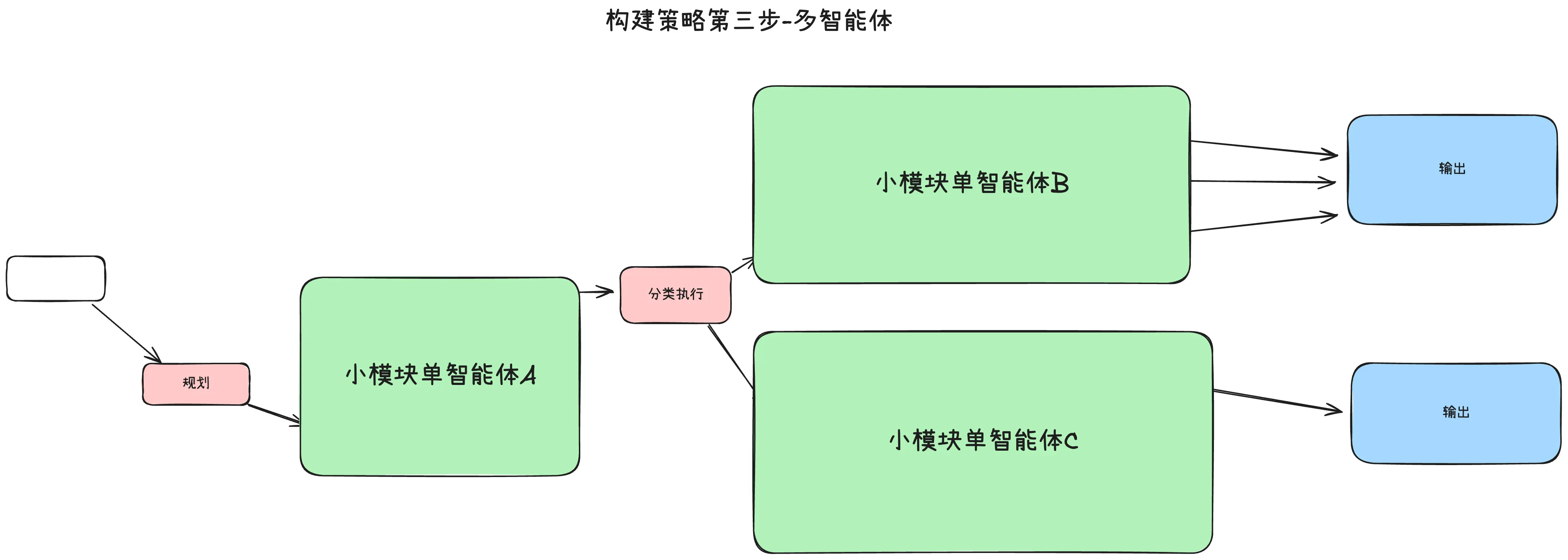
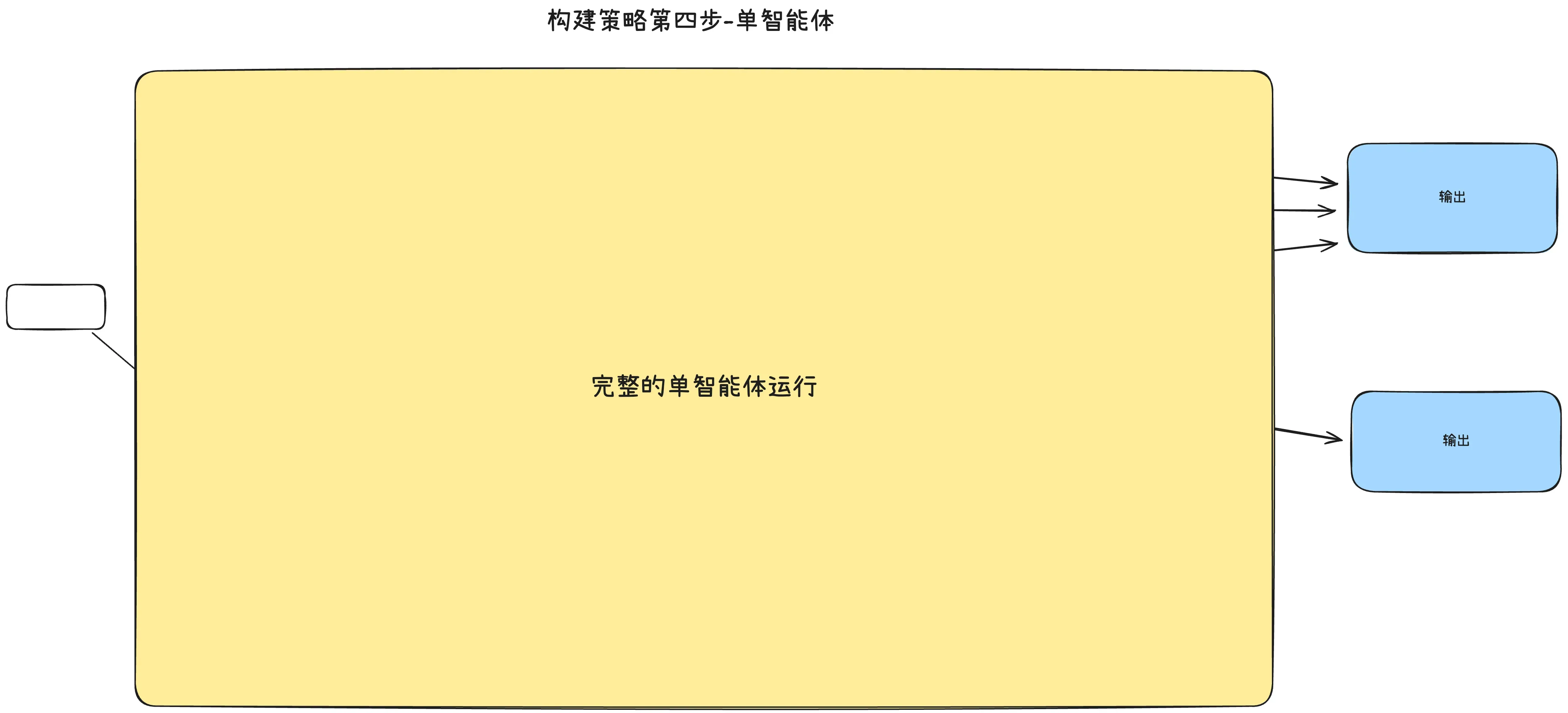
6. Progressive Building Strategy
The reasonable strategy: Build small-module single-agents → Build multi-agent systems → Upgrade to complete single-agent
- Start with single-agent development for prototypes and small modules
- As individual modules prove effective, develop single-agents for more system nodes, gradually forming a multi-agent system
- When many modules are effectively replaced and organically combined, upgrade to a complete single-agent
Advantages of starting with small modules:
- Manageable context: smaller windows mean better LLM performance
- Clear responsibilities: each agent has defined scope
- Higher reliability: less likely to get lost in complex business logic
- Simpler testing: easier to test specific functions
- More efficient debugging: easier to identify problems
This approach leverages technical iteration: as LLMs become smarter, our building direction stays stable while iteration speed and system effectiveness improve significantly.
Keep reasonable intent in agent size and scope, and only expand in ways that maintain quality. As the Notebook team said:
The most magical moments in AI building come when you’re really close to the edge of model capability.
Wherever that edge is, if you can find it and consistently ride it, you can build magical experiences. There are many moats to build, but as always, they require engineering rigor.