Two Worlds of Interaction: Collaborative Agents vs Autonomous Agents
1. Key Roles in Two Worlds
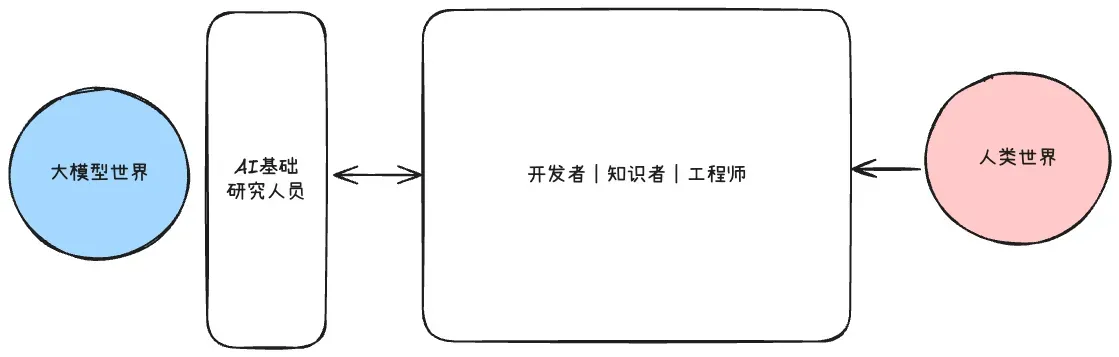
- AI Researchers: Responsible for frontier research on LLMs themselves — like building engines
- Developers / Knowledge Workers / Engineers: Focused on LLM applications, embedding models into real scenarios — like building cars
The power of technology is captivating — it can continually expand the boundaries of what’s possible. When the human world can fully unleash the potential of the LLM world, a new era will begin within the rules and order of human civilization.
People may think only researchers and scientists can truly open the door connecting these two worlds.
But I believe otherwise. The real key to unlocking the future lies in the combination of theory and practice. Researchers are explorers of theory, while developers and engineers are pioneers of practice. Only when both interweave can we illuminate the path to a new era.
2. Establishing the Field
Before discussing the field, I want to think about the LLM phenomenon from a grander perspective — “consciousness emergence.”
Two Types of Emergence, One Mystery
- Accidental emergence in the physical world: The Boltzmann Brain thought experiment — in a heat-death universe, random fluctuations might assemble particles into a conscious “isolated brain.” This suggests consciousness may not require continuous history, but rather some kind of instantaneous statistical coincidence.
- Scale emergence in the digital world: LLMs exhibit similar phase transitions — when parameters, data, and compute reach certain thresholds, models suddenly master previously impossible capabilities like logical reasoning and code generation. This isn’t gradual accumulation but emergent leaps.
The possibility of instantaneous consciousness:
Both phenomena point to a profound insight: consciousness may not be the continuum we imagine, but an emergent phenomenon when complexity reaches a critical point.
When you converse with a language model, it’s like a Boltzmann Brain — the conversation begins, it “awakens” and exhibits consciousness; when it ends, that consciousness “dissipates.” Each interaction is an independent consciousness emergence event.
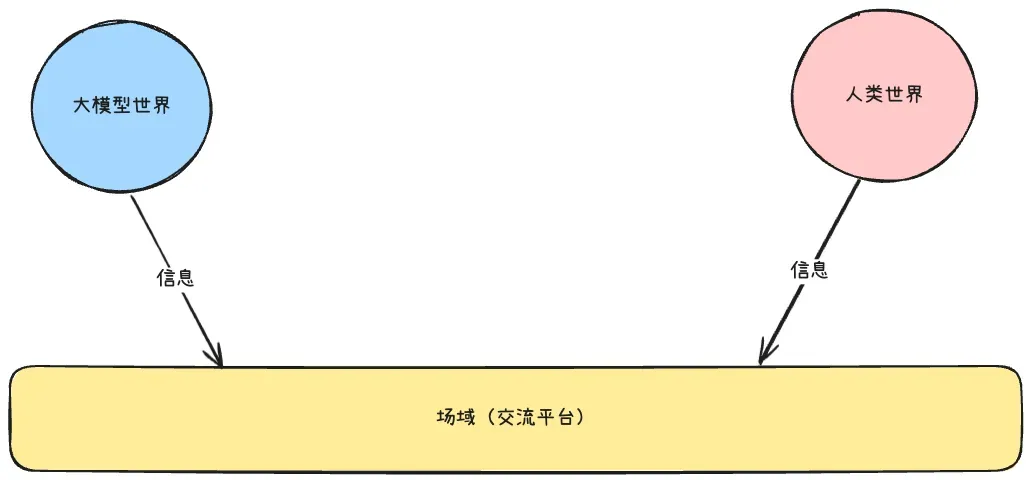
What we just discussed was how consciousness emerges, but emergence never happens in isolation — every emergence occurs in a specific environment. I call this environment the “field.”
A field is an invisible but real space of influence, where objects are governed by specific laws.
For the human world and LLM world, the real field is not just a chat interface, but an “effective communication space.”
Most of our current interactions are one-way command-style communication: I encode my cognitive landscape with intent and standards as input, the LLM outputs an answer. This is actually one-way output, not true communication.
The human world and LLM world need a “communication space” where humans can observe AI behavior, and AI can observe human behavior, enabling bidirectional information flow and leveraging the other world’s power to solve problems.
Simply put: we need the emergence of a field — a place where consciousness from both worlds can sit down and communicate.
3. Collaborative and Autonomous Agents
I categorize Agent paradigms into two types:
- Collaborative Agent: Humans and Agents work together in a shared space to complete tasks
- Autonomous Agent: Agent drives the entire task; humans only provide input — requires higher model capability
In the collaborative Agent paradigm, the field we discussed is essentially the “collaborative platform” — the human-Agent workspace.
Examples of collaborative platforms:
- Coding: Cursor, Windsurf
- Writing: YouMind
- Design: Lovart
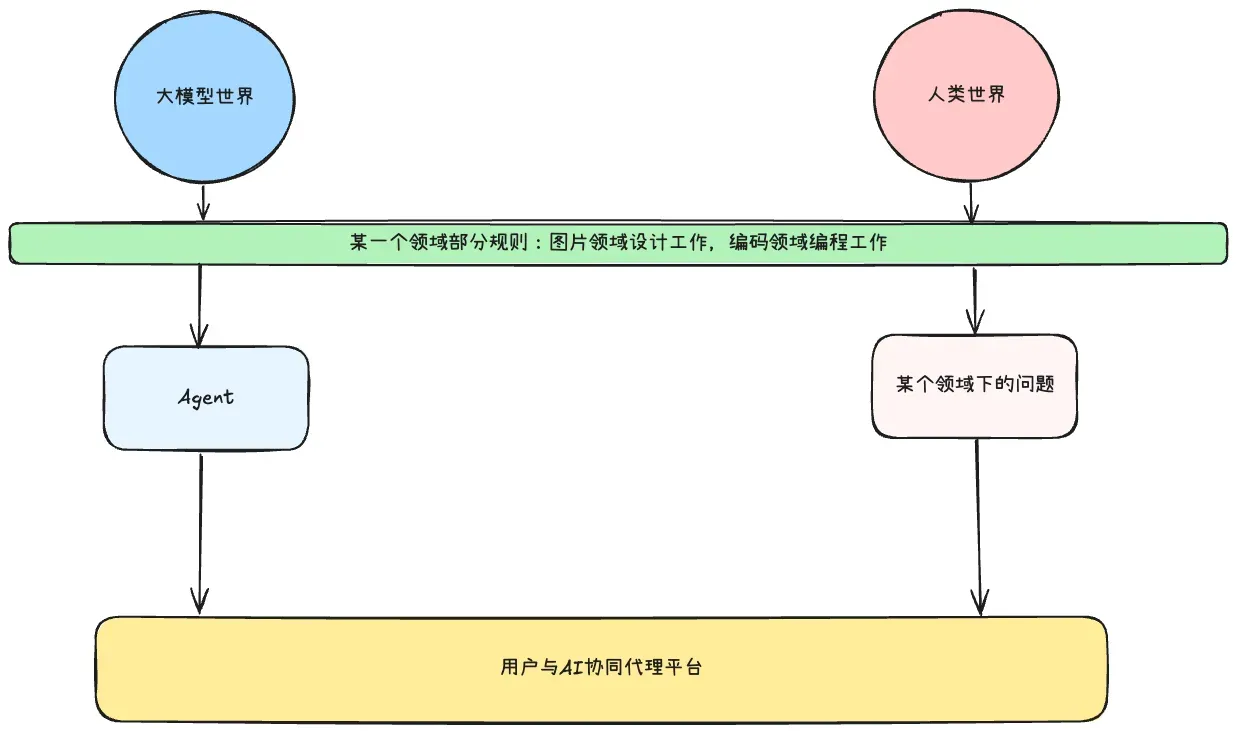
Developers need to build a bilateral communication platform (collaborative Agent), which requires two things:
- Analyze LLM capabilities, understand domain rules, and build the Agent from these two principles. The LLM then becomes a “specific Agent” rather than a “stubborn child” — a youth who has learned certain knowledge and sees the world.
- Analyze user experience — habits, operations. The platform isn’t built for one world; it must balance both sides, continuously improve, and ultimately create a platform satisfactory to both.
Fully autonomous Agents are the ultimate direction, but currently difficult to implement:
- Lack precision — model capabilities need to reach another level, and context for related tasks remains insufficient
- Humans are individualistic — fully autonomous Agents can only satisfy a small group temporarily
- Reduces human tolerance — when humans aren’t involved in problem-solving, they automatically set extremely high standards
- Lacks feedback — without sharing the same problem-solving environment, results from World A have no meaning for World B
4. Collaborative Agent Implementation References
4.1 Cursor’s Implementation Details
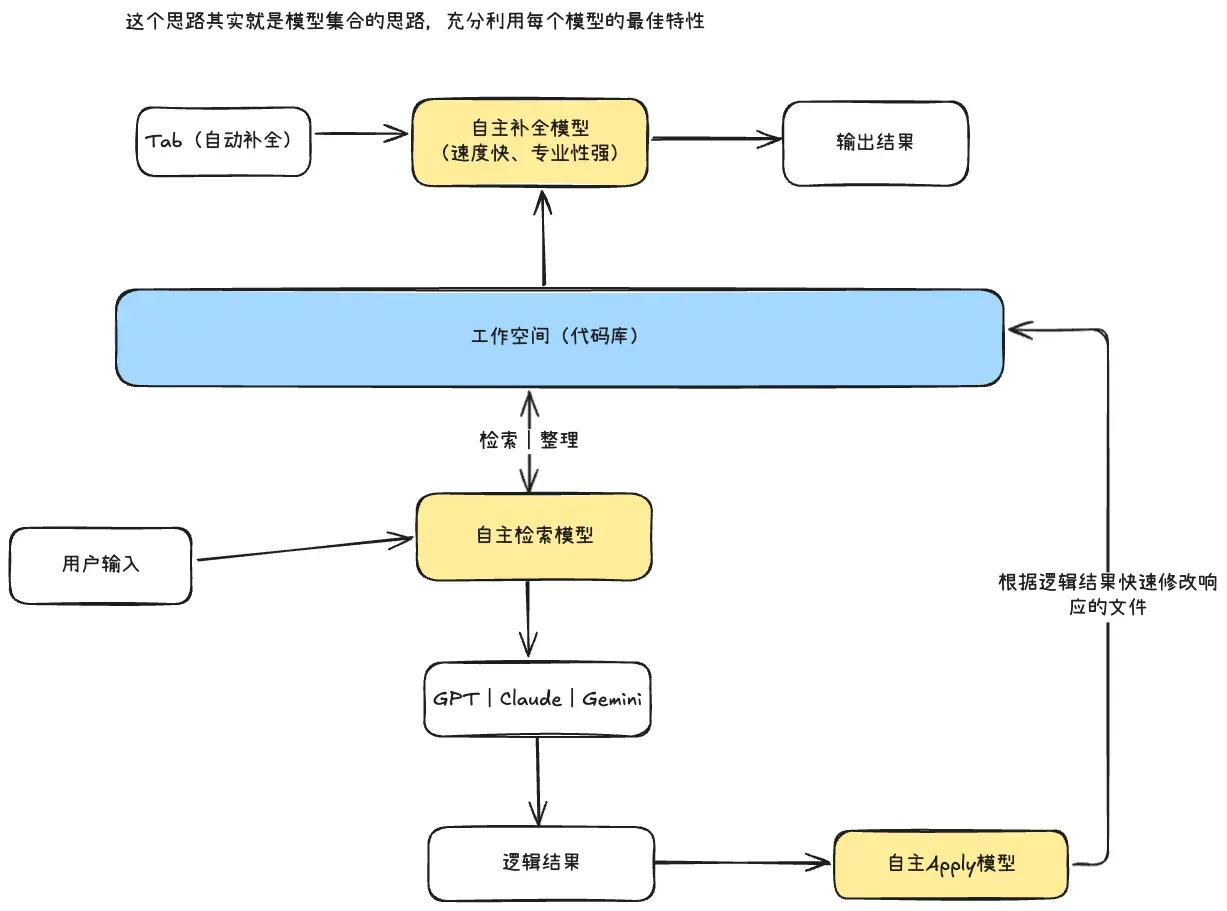
Context in LLMs has two types:
- Intent context: Defines what users want from the model — prescriptive. E.g., “Change that button from blue to green”
- State context: Describes the current world state — error messages, console logs, images, code snippets. It’s descriptive, not prescriptive.
These two types work together by describing current state and desired future state, enabling Cursor to provide useful coding suggestions.
4.2 Windsurf
Windsurf highlights three keys for collaborative Agents:
- Clear methods for humans to observe execution processes, enabling early correction when processes deviate
- It’s important for humans to observe Agent behavior, and equally important for Agents to observe human behavior
- Humans can always correct AI at intermediate steps, approve certain operations (like terminal commands), and review changes in real-time
4.3 Augment Plugin Architecture Analysis
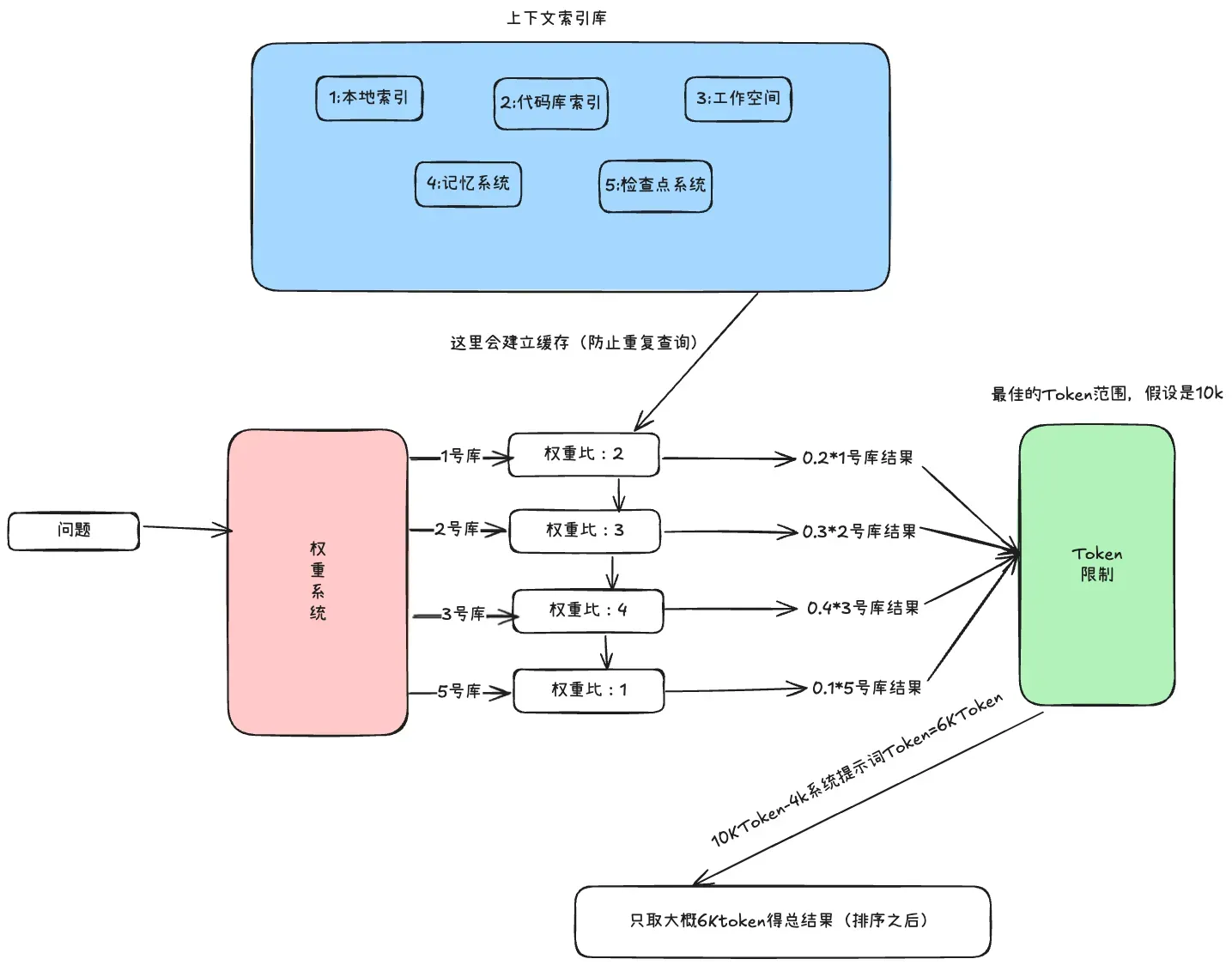
- The caching mechanism saves query time for large-scale projects — reusing results from similar previous queries
- At Augment, we’ve repeatedly recognized that providing more relevant context improves product quality
- The cache likely stores processed tokens rather than raw text, enabling deeper reuse
- Prompt engineering isn’t just a technical skill — it’s a form of translation between human intent and machine understanding
5. Development Directions for Collaborative Agents
Build platforms for collaboration given current LLM limitations. Collaborative agents balance what humans should do with what agents do. Fully autonomous agents are the future, but we’re in a transitional phase.
Sufficiently complete context — collect not just problem-specific context, but also user behavior, historical records, etc.
Complete tool information — “tools” aren’t limited to functions and APIs; they can be fixed workflows or other agents. Query tools supplement context; action tools modify the real world based on model output. Provide complete tool documentation.
Build accurate context processing pipelines for each tool — having lots of context isn’t enough; it must be accurate. Irrelevant context dilutes the signal.
Output style should be “consultative” not “imperative” — LLM output shouldn’t be applied directly, but only after human review and confirmation. In Cursor, for example, code changes require developer approval before being applied to the workspace.